
Vietnamese Marriage Certificate Australia: Apostille or Translation?
💡 Quick answer: For an Australian partner visa (or any Australian visa), your Vietnamese marriage certificate does not need an apostille. The Department of Home Affairs requires a certified English translation with the translator's credentials and accuracy statement. Vietnam joined the Apostille Convention on 11 September 2026 - but Australia's immigration process does not mandate apostille on incoming Vietnamese documents. We provide the certified translation.
- The Department of Home Affairs does not require an apostille on a Vietnamese marriage certificate for any visa subclass, including partner visas (309, 820, 100, 801).
- What Australia does require: a certified English translation of every non-English document, signed by a qualified translator.
- Vietnam joined the Apostille Convention on 11 September 2026. This allows Vietnam to issue apostilles, but it does not create a new Australian requirement for one.
- Translators working outside Australia do not need NAATI accreditation: providing name, address, qualifications, and a signed accuracy statement is sufficient for the Department of Home Affairs.
- A certified true copy from a Vietnamese notary is also not required for most visa types: a quality color scan of the original plus the certified translation is the standard submission.
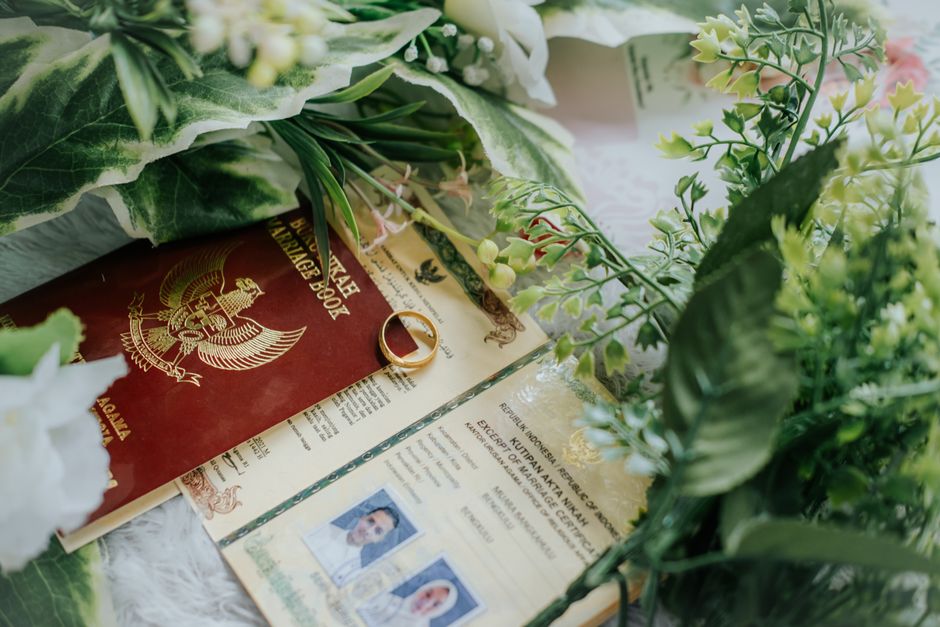
Does an Australian partner visa require apostille on a Vietnamese marriage certificate?
No. The Department of Home Affairs (DoHA) does not require apostille certification on Vietnamese documents for partner visa applications. The confusion is understandable: Vietnam joined the Hague Apostille Convention on 11 September 2026, and many applicants wonder whether this created a new requirement.
It did not. An apostille authenticates the seal and signature of the issuing authority on an original document - it tells a foreign government that the document genuinely came from a Vietnamese state body. Australian immigration officers rely on the certified English translation to understand the content, not on an apostille to authenticate origin. The DoHA applies its own document assessment procedures and does not mandate apostille for incoming Vietnamese documents.
What changed when Vietnam joined the Apostille Convention in September 2026
Before 11 September 2026, Vietnamese documents could not carry an apostille at all. To authenticate a Vietnamese public document abroad, applicants had to go through multi-step consular legalization: notary seal, Ministry of Justice authentication, Ministry of Foreign Affairs authentication, and then consular legalization at the destination country's mission in Vietnam.
From 11 September 2026, a single apostille issued by the Vietnamese Ministry of Foreign Affairs (MOFA) replaces that chain for the 128 other Hague Convention member states - which includes Australia. This simplifies Vietnamese document authentication for countries that specifically request it, such as some European civil registries or foreign universities that ask for government authentication. However, Australian immigration has never required consular legalization of Vietnamese marriage certificates either, so the apostille option does not change the practical checklist for Australian visa applicants.
One important exception: Germany, Austria, and the Czech Republic have objected to Vietnam's accession. Documents destined for those three countries still require consular legalization, not apostille.
What the Department of Home Affairs actually requires
For all Australian visa categories, the DoHA rule is: every non-English document must be accompanied by a certified English translation. For partner visas, the marriage certificate (Giấy chứng nhận đăng ký kết hôn) must be translated in full - including all printed fields, registration details, and the People's Committee seal description.
The translation must include the translator's full name, contact details, language qualifications, and a signed statement that the translation is complete and accurate. No notarization of the translator's signature is required.
| Authentication type | What it confirms | Who provides it | Required for Australian visa? |
|---|---|---|---|
| Apostille | The document was genuinely issued by a Vietnamese state authority | Vietnamese Ministry of Foreign Affairs (from Sep 2026) | No - DoHA does not require it |
| Certified true copy | A photocopy is identical to the original | Vietnamese notary office (văn phòng công chứng) or People's Committee | No - quality color scans are accepted |
| Certified translation | The English text faithfully represents the Vietnamese original | Qualified translator with signed accuracy statement | Yes - always required for non-English documents |
NAATI accreditation: does it apply to a translator working in Vietnam?
NAATI (National Accreditation Authority for Translators and Interpreters) is Australia's translation standards body. The DoHA requires NAATI accreditation only for translators physically working inside Australia. A translator working outside Australia - including a Vietnamese-English translator based in Vietnam - does not need NAATI accreditation.
For an overseas translator, the DoHA's published requirement is: state your full name, address, phone number, and language qualifications in English on the translation. That credential statement, together with the signed accuracy declaration, is what makes the translation certified and accepted.
For a certified Vietnamese marriage certificate translation for Australian immigration, this means your translated document arrives with a cover sheet naming the translator, their qualifications, and their signed statement of accuracy - fully compliant with DoHA rules, without the need for NAATI.
Does Australia need a certified true copy of the Vietnamese marriage certificate?
For most Australian visa types today, the DoHA accepts quality color scans of original documents. You do not need to obtain a certified true copy from a Vietnamese notary office before scanning and submitting. The certified translation attaches to your scan.
The checklist for your marriage certificate submission is therefore:
- A clear, color scan of the full original marriage certificate (both sides if applicable)
- The certified English translation of the complete document
- The translator's credentials and signed accuracy statement on the translation
If your case officer issues a subsequent request for a notarized copy or a certified true copy, that is handled separately at that point. It is not a standard upfront requirement.
The correct order: what to prepare and when
Because neither apostille nor a notarized true copy is required upfront, the preparation sequence for most Australian visa applications is straightforward. First, locate your original marriage certificate and scan it at high resolution. Second, send the scan to a qualified translator for the certified English translation. Third, upload both the scan and the certified translation to your ImmiAccount application.
If you are preparing documents for a partner visa that is still at the offshore subclass 309 stage, the same rule applies: certified translation, no apostille required. For permanent-stage review of subclass 100 or 801, requirements are the same.
Ready to order? Get a quote for your certified Vietnamese marriage certificate translation - typically returned within 1-3 business days.
FAQ
Does Vietnam's apostille change anything for my Australian partner visa application?
No. Australia does not require apostille on Vietnamese documents for any visa category. Vietnam's accession to the Apostille Convention from 11 September 2026 gives Vietnamese documents a simpler authentication path for countries that specifically demand it, but Australia's Department of Home Affairs does not. Your checklist remains: certified translation plus original scan.
Is a NAATI-certified translation required for Vietnamese documents in an Australian visa?
NAATI accreditation is required only if the translator is working inside Australia. A translator based in Vietnam does not need NAATI accreditation: the Department of Home Affairs accepts the translation when the translator states their name, address, phone number, and qualifications in English and signs an accuracy statement.
Does the Vietnamese marriage certificate need to be apostilled before translation?
No. For Australian visa purposes, you do not need to apostille the original at any point. Apostille is not part of the Australian immigration document checklist. Simply scan the original certificate and submit it with the certified English translation.
Which visa subclasses does this apply to: 309, 820, 100, 801?
All four. Subclasses 309 (partner offshore) and 820 (partner onshore) are the temporary stages; 100 and 801 are the permanent stages. All require a certified translation of the Vietnamese marriage certificate. None require apostille. The same applies to prospective marriage visa (subclass 300).
What if a certified true copy is listed on a checklist I downloaded?
Older checklist templates sometimes list "certified copy," but the DoHA has clarified that this means a quality scan or photograph of the original, not a notarized copy from a Vietnamese authority. A Vietnamese notary-certified true copy is not wrong to include, but it is not required and does not replace the certified translation.
Related reading: certified true copy vs certified translation for Australian visas - full document translation checklist for an Australian partner visa - does Vietnam's 2026 apostille replace the certified translation?
Written by Dao Huy (Lucas), Vietnamese translator & localization specialist (EN · ZH · FR → Vietnamese). See translation services → · Certified Documents →