
Second Pregnancy Rewires Your Brain in a Surprising New Way
💡 Second pregnancy brain changes, in brief: A July 2026 study in Nature Communications scanned 110 women and found that a second pregnancy reshapes different brain networks than a first. Second pregnancy targets the dorsal attention and somatomotor networks - not the default mode network altered by first pregnancy. Grey matter drops in both: a marker of neuroplasticity, not damage.
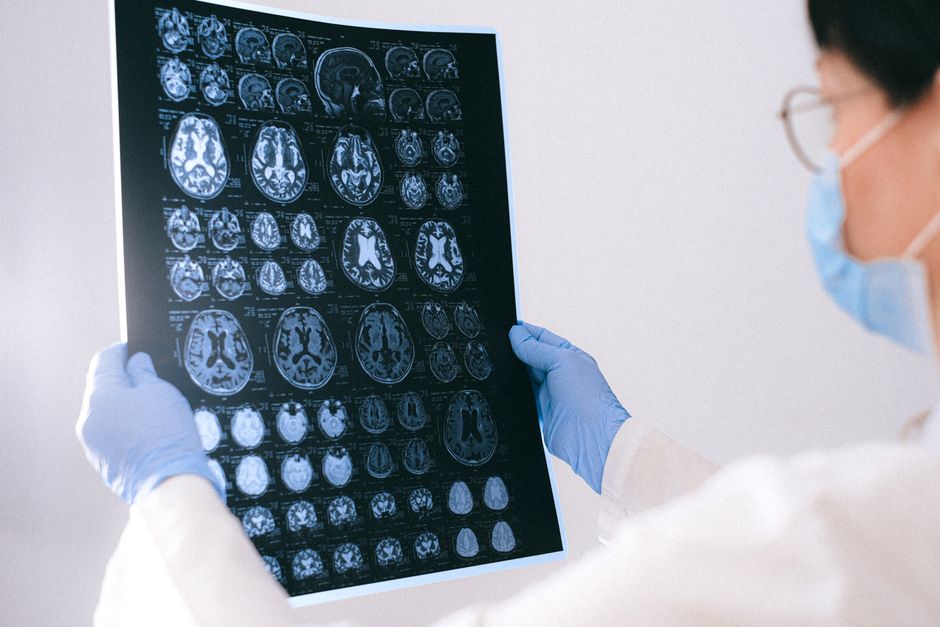
- 110 women were scanned before and after pregnancy using MRI at Amsterdam University Medical Center
- First pregnancy caused the largest changes in the default mode network, tied to bonding and social cognition
- Second pregnancy more strongly altered the dorsal attention and somatomotor networks, linked to sensory processing and divided attention
- Grey matter volume dropped significantly in both pregnancies - researchers interpret this as purposeful neuroplasticity, not brain damage
- For the first time, the study linked specific cortical brain changes to peripartum depression risk in both pregnancies
- Journal
- Nature Communications
- Type
- Longitudinal observational study (MRI brain scans before and after pregnancy)
- Sample
- 110 women: 40 in first-pregnancy group, 30 in second-pregnancy group, 40 childless controls
- Published
- July 2026
- Institution
- Amsterdam University Medical Center, Netherlands
What Did the Study Find?
For years, neuroscientists have known that pregnancy changes the brain. A 2016 study - also led by Elseline Hoekzema at Amsterdam University Medical Center - showed that a first pregnancy causes lasting reductions in grey matter volume across social cognition regions. But that research tracked only first-time mothers. This July 2026 study in Nature Communications asks the obvious next question: what do second pregnancy brain changes look like? The answer is not simply more of the same.
The team recruited 110 women across three groups: 40 expecting their first child, 30 expecting their second, and 40 who had never given birth (the control group). All underwent structural MRI to measure grey matter volume and white matter tracts, and resting-state functional MRI to assess how brain networks communicate at rest. Scans were taken before and after each pregnancy - not during, for ethical reasons. Including a childless control group means the team could rule out changes that happen anyway due to ageing or the passage of time.
The key finding: the first and second pregnancies each leave a distinct neurological signature. Both cause significant grey matter reductions - but they do not target the same brain systems.
How a First Pregnancy Changes the Brain
The dominant pattern in a first pregnancy is significant reorganization of the default mode network (DMN). This network activates when we think about ourselves, imagine other people's perspectives, or reflect on social situations. It is also central to forming a bond with a new person.
Grey matter in DMN regions drops substantially during a first pregnancy. Hoekzema's 2016 research showed these reductions lasted at least two years post-birth - consistent enough that researchers could identify whether a woman had been pregnant from her brain scan alone. The drops were not linked to any measurable cognitive impairment. They appear to represent a sharpening: the brain specializes its social circuitry for the demands of caring for a new infant.
As we explored in our piece on how the adult brain continues to adapt throughout life, pregnancy is one of the clearest demonstrations of neuroplasticity in adulthood. The brain reorganizes in response to major life experiences, and few are more profound than new parenthood.
How Does a Second Pregnancy Rewire the Brain Differently?
When a second child arrives, the primary parenting challenge shifts. A new baby still needs attunement and bonding - but the parent must also divide attention, respond to competing sensory demands, and coordinate care for children at different developmental stages. The 2026 study suggests the brain adjusts for exactly this.
In the second-pregnancy group, the DMN still changed - but less strongly than during the first pregnancy. The most pronounced new alterations appeared in two other networks:
- Dorsal attention network: Directs voluntary attention - helping the brain scan and prioritize information, switch tasks, and sustain focus across multiple competing demands.
- Somatomotor network: Processes sensory inputs (sound, touch, visual cues) and coordinates physical responses to those cues.
The combination of heightened attention control and stronger sensory processing is, the researchers propose, well suited to managing more than one child. The brain is not repeating the first pregnancy's update. It is deploying a different version, tuned to a more complex caregiving context.
| Brain Network | First Pregnancy | Second Pregnancy |
|---|---|---|
| Default mode network | Largest changes - social cognition and bonding circuits | Still changes, but less pronounced |
| Dorsal attention network | Moderate alteration | More prominent - attention and task-switching |
| Somatomotor network | Moderate alteration | More prominent - sensory processing and motor response |
Beyond grey matter, the study also documented distinctive changes in white matter tracts - the long-distance fibres connecting brain regions - in the second-pregnancy group. This adds to the picture of pregnancy as a whole-brain reorganization, not a localized adjustment. For a broader look at how lifestyle and life events shape brain structure, see our analysis of how viewing habits relate to brain volume and our overview of lifestyle factors linked to brain health.
Does this mean a second pregnancy is harder on the brain? No evidence from this or any prior study supports that conclusion. The grey matter reductions seen in both pregnancies have not been linked to any measurable cognitive decline. The reorganization appears purposeful. Each pregnancy leaves a different imprint - the brain is not resetting between births, it is updating for a new caregiving context.
Is There a Link to Peripartum Depression?
One clinically significant aspect of this study is a first-of-its-kind finding: the researchers identified a link between specific cortical structural changes and peripartum depression in both first and second pregnancies.
Peripartum depression affects roughly 10 to 15 percent of mothers worldwide and remains underdiagnosed. It involves persistent sadness, anxiety, and difficulty bonding with the newborn. Previous research has pointed to hormonal and psychosocial contributors. This study adds a neurological dimension: certain patterns of brain reorganization during pregnancy appear associated with vulnerability to depression around the time of birth.
This is an association found in observational data, not a causal proof. The study cannot say that any particular brain change causes peripartum depression. What it does is open a path for future research and, eventually, for earlier identification of women who might benefit from extra mental health support around pregnancy.
This is general information, not medical advice. If you are experiencing symptoms of depression or anxiety before or after a pregnancy, please speak with a healthcare professional for support specific to your situation.
The Caveats: What This Study Cannot Tell Us
Several important limitations shape how far these results can be generalized:
Small sample: Only 30 women were in the second-pregnancy group. This is reasonable for an intensive neuroimaging study, but findings from samples of this size should be replicated before drawing firm conclusions.
No scans during pregnancy: Because scanning during pregnancy was not ethically possible, the exact timing of brain changes remains unknown. The study shows a before-and-after picture, not a real-time process.
Observational design: The study shows that second pregnancy is associated with distinctive brain changes - not that any single factor causes them. Controlling for age, hormonal profile, prior birth experience, and lifestyle across groups is complex.
One population: Participants were recruited from the Netherlands. Whether these patterns hold across different cultures, ages, and health profiles is not yet known.
Single post-birth scan: Women were scanned once after giving birth. How long these changes last, whether they intensify or fade, and whether white matter and grey matter alterations follow different timelines all remain open questions. Hoekzema's earlier work suggested first-pregnancy changes last at least two years - but the timeline for second-pregnancy changes is unstudied.
This is one well-designed, peer-reviewed study in a high-impact journal. It is a meaningful contribution to a young but growing field - and it calls for follow-up research with larger, more diverse samples measured at multiple points in time.
FAQ
Does a second pregnancy damage or worsen the brain?
No evidence from this study or prior research suggests second pregnancy impairs cognitive function. The grey matter reductions found in both pregnancies have not been linked to measurable decline in memory, language, or reasoning. Researchers interpret the changes as purposeful neuroplasticity - the brain reorganizing for new demands, not degrading.
Which brain networks change most in a second pregnancy?
The dorsal attention network and somatomotor network showed the most pronounced changes in the second-pregnancy group. These handle directed attention, task-switching, sensory processing, and physical coordination. The default mode network - which dominated first-pregnancy changes - still altered but less strongly during a second pregnancy.
Is peripartum depression caused by brain changes during pregnancy?
This study found an association between specific cortical changes and peripartum depression in both pregnancies, but cannot establish causation. Peripartum depression involves hormonal, psychological, and social factors. The neurological link identified here opens research directions and may eventually support earlier identification of at-risk mothers, but is not a diagnostic tool at this stage.
How long do pregnancy-related brain changes last?
Earlier research by the same team found grey matter changes from a first pregnancy persist at least two years after birth. This 2026 study did not measure the long-term persistence of second-pregnancy changes. Further longitudinal research is needed to answer this specifically.
Do fathers or non-birth parents experience similar brain changes?
Other research has found some brain changes in involved fathers - particularly in networks linked to motivation and social bonding - but these appear smaller in magnitude and differently distributed than in birth mothers. Comparisons are difficult because the hormonal context of pregnancy is unique to the person carrying the child. This study focused exclusively on birth mothers.
About the author
Dao Huy (Lucas) is a professional translator with seven-plus years of experience across English, Vietnamese, Chinese, and French. He writes these science explainers out of genuine curiosity about how research on the brain and human biology connects to the way we communicate, learn languages, and understand each other - themes that surface daily in his translation work.
He also offers professional English-Vietnamese translation, certified document translation, and multilingual localization services. If you need accurate, reliable translation for a document or project, you are welcome to visit daohuy.com for a free quote.
Written by Dao Huy (Lucas), Vietnamese translator & localization specialist (EN · ZH · FR → Vietnamese). See translation services →