
Alzheimer's 3D Genome: A Hidden Disease Layer Just Came Into View
💡 Researchers at Carnegie Mellon, Pittsburgh, and Washington found that the 3D architecture of DNA is measurably altered in Alzheimer's-affected brain cells. This change, called compartment mingling, blurs the genome's active and inactive regions and weakens how genes are regulated. It is a previously invisible layer of the disease, described in Science in September 2026.
- A study in Science (September 2026) found 3D genome folding is significantly altered in neurons and microglia from Alzheimer's patients' brains.
- The key finding is "compartment mingling": the genome's active and inactive zones blur, disrupting how critical genes are switched on and off.
- The team used GAGE-seq (reads gene expression and 3D genome contacts in individual cells simultaneously) and the Hicformer AI model to map and predict the changes.
- About 7 million Americans have Alzheimer's. If genome structure proves to be a driver, it could point to an entirely new category of therapeutic targets.
- Honest limit: all samples were postmortem brain tissue. The researchers cannot yet say whether these structural changes cause the disease or result from it.
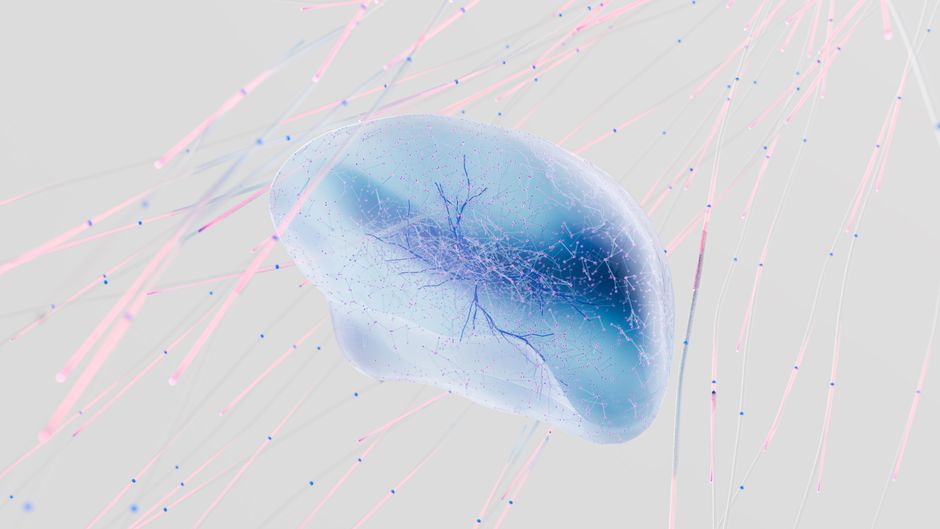
What Just Changed in Alzheimer's Research
For decades, the dominant story of Alzheimer's disease has been about two proteins: amyloid plaques that accumulate between neurons, and tau tangles that form inside them. Targeting those proteins has consumed most of the field's attention and most of its drug trial investment. Most of those trials have failed outright or shown only modest effects. The disease remains poorly understood at the cellular level.
A study published in Science adds a fundamentally different layer. The Alzheimer's 3D genome architecture of brain cells is measurably altered in people who had the disease. This is not about the DNA sequence, which is what most people picture when they think about genetics. It is about the physical folding of DNA inside the cell nucleus, the three-dimensional structure that determines which genes can be activated. That structure is disrupted in Alzheimer's-affected cells in ways that change how they behave.
How Does 3D Genome Folding Work?
DNA inside every human cell is roughly two meters long. It must fit inside a nucleus only a few micrometers wide, so it is coiled and folded into a precise three-dimensional structure. That structure is not random. It physically separates the genome into active compartments, where genes can be switched on, and inactive compartments, where they are silenced.
When a gene is in an active region and positioned near its regulatory switches, the molecular signals that activate it, it gets expressed. When compartment boundaries blur or a gene drifts away from its switches, its activity changes. This is what the researchers call compartment mingling: the clear separation between active and inactive genome regions becomes less distinct. Genes that should be on go quiet, and the regulation breaks down.
What Did the Study Find?
The joint team from Carnegie Mellon University, the University of Pittsburgh School of Medicine, and the University of Washington analyzed postmortem prefrontal cortex tissue from people who had had Alzheimer's disease and compared it to tissue from cognitively healthy donors. The lead researchers were Jian Ma (CMU), Hansruedi Mathys (Pitt), and Zhijun Duan (UW).
They used a technique called GAGE-seq, which simultaneously reads gene expression and 3D genome contacts in individual cells. By combining GAGE-seq data with spatial mapping of brain tissue and the Hicformer AI model, the team could connect changes in genome structure to changes in gene activity at single-cell resolution.
The findings across cell types:
- Neurons showed reduced neuronal and synaptic gene programs, linked to compartment mingling and weaker connections between genes and their regulatory elements.
- Microglia (the brain's immune cells) showed senescence-related changes and altered metabolic and stress responses. This fits with recent evidence that microglia are among the brain's most age-sensitive cells.
- Genome contacts became fewer at short range and more frequent across long distances, a pattern distinct from healthy tissue.
What Does This Mean for You?
Alzheimer's affects roughly 7 million Americans and more than 55 million people worldwide. It is frustratingly resistant to treatment, partly because researchers have been working from an incomplete picture of what is going wrong inside affected cells.
Each new mechanistic layer matters because it opens a new category of possible interventions. The 3D genome finding is significant for two reasons. First, genome structure is upstream of many other disease processes. If the architecture controls which genes can be activated, then changes in structure could explain multiple downstream problems simultaneously: why neurons lose their synaptic function and why microglia become dysfunctional at the same time, rather than treating these as separate problems.
Second, the Hicformer AI model is a reusable research tool. Other labs can now ask: does 3D genome structure also change in Parkinson's disease, or in healthy aging, or under specific metabolic stresses? Researchers can test hypothetical interventions computationally before running any laboratory experiments, which is where this kind of AI platform genuinely accelerates the research cycle.
For anyone monitoring this field, the finding connects to other recent threads: fragmented sleep raises Alzheimer's risk, and speaking two languages appears to delay disease onset. Future research may reveal whether these external factors work partly by influencing genome architecture inside brain cells.
Does Genome Structure Cause Alzheimer's, or Is It the Result?
This is the study's honest limit, and the authors state it plainly. The data comes from postmortem tissue: brains that already had Alzheimer's disease. Researchers see the genome structure of a diseased brain, not a brain in the process of developing the disease.
Two different stories are consistent with the same data. In one, compartment mingling is an early disruption that drives downstream amyloid and tau pathology. In the other, amyloid and tau pathology gradually disrupts genome organization as a consequence. Determining which direction causation runs, and whether it operates as a feedback loop, requires longitudinal data that does not yet exist.
The phrase "new therapeutic pathway" that appears in press coverage is technically accurate, but it should be read as "a new hypothesis for what to investigate," not as a drug target ready for clinical trials. The distance from a mechanistic finding in postmortem tissue to a treatment approval in Alzheimer's research has historically been very long. This is a new door opened, not a solution found.
What to Watch Next
The most important follow-up is longitudinal data: samples from donors who progressed from cognitively normal to mild cognitive impairment to Alzheimer's, so researchers can identify where in that progression the 3D changes first appear. If they appear before clinical symptoms, that would strongly support a causal role rather than a downstream effect.
The GAGE-seq technique and Hicformer model are also available for other research groups. Any disease where gene regulation in specific cell types is disrupted is a candidate for this kind of analysis. The technical platform may prove as important over time as the specific Alzheimer's 3D genome finding that motivated it.
FAQ
What is compartment mingling in Alzheimer's?
Compartment mingling describes the blurring of the boundary between active and inactive genome regions in Alzheimer's-affected brain cells. Normally, the genome is physically organized so that active genes are positioned near their regulatory switches. In Alzheimer's patients' brains, this organization becomes less distinct, weakening how genes are regulated and reducing activity in critical neuronal programs.
What is 3D genome folding and why does it matter?
The 3D genome refers to the physical folding of DNA inside the cell nucleus. DNA is about two meters long but must fit into a space micrometers wide, so it folds into a precise structure that determines which genes are accessible and can be turned on. Changes in 3D structure can alter gene activity even when the underlying DNA sequence is identical. This is a layer of biology entirely distinct from standard genetics.
Does this finding mean there will be new Alzheimer's treatments soon?
Not soon. The finding reveals a previously unknown disease mechanism, which is scientifically important, but all samples were postmortem tissue and researchers cannot yet confirm whether the structural changes cause Alzheimer's or result from it. Translating a mechanistic finding into a clinical treatment typically takes years of further investigation. This is a significant map addition, not a near-term cure.
What is Hicformer and why does it matter for Alzheimer's research?
Hicformer is an AI model developed by the Carnegie Mellon team that combines DNA sequence data, broad genome-folding features, and 3D contact maps to predict gene activity across different cell types. It acts as a computational testbed: researchers can ask what would happen to gene activity if genome structure changed in specific ways, without needing full laboratory experiments first. It is a reusable tool well beyond this single study.
What is GAGE-seq?
GAGE-seq is a laboratory technique that reads both gene expression and 3D genome contacts simultaneously in individual cells. Earlier methods typically measured either gene activity or genome structure, but not both at once. GAGE-seq lets researchers directly connect specific structural changes in the genome to specific changes in gene output within the same cell, which is what made this Alzheimer's analysis possible at single-cell resolution.
Source(s): ScienceDaily - Scientists find a new layer of Alzheimer's hidden in the genome (2026); Carnegie Mellon University press release (2026)
About the author
Dao Huy (Lucas) is a professional translator working across English, Vietnamese, Chinese, and French with over seven years of experience. He follows developments at the science and technology frontier because understanding what is being discovered globally, and communicating it clearly across languages, is central to his work. Research like this is inherently international: clinical trial protocols, patient consent forms, and scientific papers for multinational Alzheimer's studies all require precise multilingual translation to reach the people who need them.
If you need English-Vietnamese, technical, or scientific translation services, Dao Huy offers professional work with a focus on accuracy and nuance. Request a quote at daohuy.com.
Written by Dao Huy (Lucas), Vietnamese translator & localization specialist (EN · ZH · FR → Vietnamese). See translation services →