
DARE Cells: Surviving Programmed Cell Death to Rebuild Tissue
💡 Researchers at the Weizmann Institute discovered cells that begin their own self-destruct sequence but halt it before completing apoptosis. In fruit fly experiments, these DARE cells replenished nearly half of damaged tissue within 48 hours. Their descendants proved seven times more resistant to future damage than the original tissue.
- Weizmann Institute researchers named these "DARE cells" (Death-resistant cells Actively undergoing Regeneration Enhancement), published in Nature Communications on September 19, 2026.
- DARE cells halt apoptosis using a molecular motor protein that tethers the initiator caspase to the cell membrane, blocking the final execution step.
- In fruit fly larvae experiments, DARE cells replenished nearly half of severely damaged tissue within 48 hours.
- Descendants of DARE cells showed seven times greater resistance to apoptosis than the original tissue, with implications for both healing and cancer recurrence.
- Caveat: all results come from fruit fly experiments. Whether the same mechanism operates in mammals or humans has not been tested.
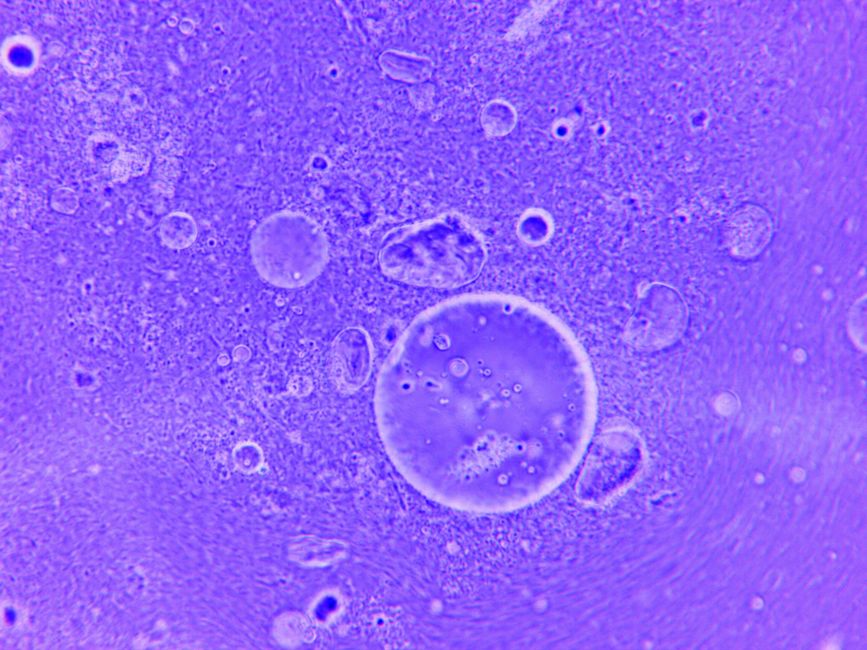
How does a cell freeze its own self-destruct sequence?
Every cell in your body carries a built-in self-destruct program called apoptosis. Under severe stress - infection, radiation, or chemical damage - a cell activates a cascade of enzymes called caspases that systematically take it apart from the inside. This is normally a one-way process.
The Weizmann team found that a small subset of cells can wedge that door open. When a DARE cell senses initiator caspase activity, a molecular motor protein physically tethers the caspase to the cell's inner membrane. That tethering freezes the process: the initiator fires, but the downstream executioner caspases never complete their job. The cell survives in a stressed but viable state, then starts dividing.
When researchers silenced this motor protein experimentally, DARE cells lost their survival ability entirely. Tissue regeneration failed. That clean result is what makes the finding compelling: one molecular actor appears to be doing the critical gating work in programmed cell death and tissue repair.
What does this mean for wound healing and tissue repair?
In standard models of tissue regeneration, healing happens because healthy neighboring cells divide to fill in the gap. The DARE cells study adds a different route: some cells at the edge of severe damage begin to die, pause midway, and then become highly active repair cells. Within 48 hours in severely irradiated fly larvae, DARE-driven regeneration accounted for nearly half of the replenished tissue.
If the same process operates in mammals, it would mean that severely stressed tissues are not relying only on bystander healthy cells. Some of the repair work comes from cells that had already started their self-destruct sequence. That is a fundamentally different picture of how recovery works.
For regenerative medicine, this opens a new target. Rather than only stimulating healthy cells to divide, researchers could look for ways to enhance or protect the DARE pathway - giving severely damaged tissues a larger pool of fast-dividing, stress-hardened repair cells.
Could this explain why some cancers return after treatment?
There is a more troubling implication. Cancer cells regularly face apoptosis signals: from the immune system, from chemotherapy, from radiation. If cancer cells can activate a DARE-like survival mechanism, it would help explain a long-standing puzzle: why do some tumors return after treatment, and why does the recurrence often resist therapy better than the original tumor did?
The study found that descendants of DARE cells were seven times more resistant to apoptosis than the starting population. In a tumor, that kind of acquired resistance is exactly what oncologists fight against. A subpopulation that survives treatment, inherits elevated apoptosis resistance, and regrows could account for clinical recurrence patterns that have lacked a clear molecular explanation.
This is still a mechanistic hypothesis in flies, not a proven cause in human cancer. But it is a testable hypothesis, and that is what makes it scientifically significant beyond tissue repair alone.
How far is this from human medicine?
The honest answer: a meaningful distance. Every result in this study came from fruit fly larvae (Drosophila melanogaster). Fly apoptosis and mammalian apoptosis share core machinery - caspases, the Bcl-2 family, cytochrome c. That shared ancestry is why flies are used as a model at all. But the specific motor protein doing the membrane-tethering in DARE cells may not have a direct mammalian equivalent, or may behave differently in human tissue.
The Weizmann researchers were explicit: "additional research will be needed to determine how closely the same mechanisms operate in people." This is the standard caution that applies whenever a fly finding is announced, and it applies here.
This does not make the result unimportant. It means the finding belongs in the "promising lead" category, not the "new therapy" category. The next steps are mouse models, then organoids, then human cell lines. That pipeline typically takes years.
What to watch for next
The key open question is whether the molecular motor protein identified in flies has a mammalian equivalent that behaves the same way. If it does, drug screens targeting that interaction become immediately relevant for both wound care and oncology.
A second area to watch: how DARE descendants interact with the immune system. Cells that survive apoptosis and then proliferate could send unusual signals to nearby immune cells. Whether they suppress or amplify inflammation will matter for any therapeutic application.
For anyone following the science of cellular resilience and tissue regeneration, the DARE cells paper is worth bookmarking. It introduces a specific molecular gate - the motor protein and caspase membrane-tethering mechanism - that will likely appear in follow-up studies across multiple labs in the coming years.
FAQ
What exactly are DARE cells?
DARE stands for Death-resistant cells Actively undergoing Regeneration Enhancement. They are cells that activate the early stages of apoptosis but halt the process before completion, using a molecular motor protein to freeze caspase activity. They then divide rapidly and contribute to tissue repair after severe damage.
Does this mean we could stop cancer cells from surviving chemotherapy?
Not yet. The study identifies a molecular mechanism in fruit flies that could help explain treatment resistance, but it has not been tested in mammalian or human cancer cells. Understanding the mechanism is the first step. Blocking it therapeutically would require years of additional research and clinical validation before reaching patients.
Could DARE cells eventually speed up wound healing in humans?
It is a plausible research direction, but all current evidence comes from fruit fly tissue. If the same mechanism is confirmed in mammals, it may one day be possible to enhance the DARE pathway after severe injuries. Any clinical application is likely many years away.
How is this different from how we thought cells repaired tissue before?
The standard model focuses on healthy neighboring cells dividing to replace lost ones. DARE cells add a different route: cells that begin dying, pause the process, and become fast-dividing repair cells. The paper shows this contributed nearly half of the tissue replenishment in severe-damage experiments, which is a substantial share of the recovery.
Where was this research published and who did it?
The study was published in Nature Communications on September 19, 2026, by a team led by Dr. Tslil Braun from Prof. Eli Arama's laboratory at the Weizmann Institute of Science in Israel. Collaborators included researchers from UMass Chan Medical School and Spain's Severo Ochoa Molecular Biology Center.
Source(s): ScienceDaily - DARE cells and tissue regeneration (2026); Vanguard News - Cells that cheat death (2026)
About the author
Dao Huy, known professionally as Lucas, is a professional translator working across English, Vietnamese, Chinese, and French, with over seven years of experience in legal, technical, and scientific documents. He follows cell biology and medical research out of genuine curiosity, particularly where breakthroughs need to cross language barriers accurately - since a mistranslated clinical finding can have real consequences for patient care decisions.
If your work involves translating English-Vietnamese scientific, medical, or technical content, Lucas offers professional translation and localization services. You are welcome to request a quote at daohuy.com.
Written by Dao Huy (Lucas), Vietnamese translator & localization specialist (EN · ZH · FR → Vietnamese). See translation services →