
Bat Genome Study Links Long Life, Cancer, and Viral Immunity
💡 Published in Nature on August 26, 2026, a new analysis of eight bat genomes found that the same genes helping bats fight DNA viruses also drive their exceptional cancer resistance and long lifespan. For the first time, aging, immunity, and cancer resistance appear as one unified evolutionary strategy - not three separate problems.
- A team led by Juan Manuel Vazquez (Penn State) sequenced near-complete genomes for eight closely related Myotis bat species and maintained cell cultures from 259 individuals across 32 species - publishing results in Nature on August 26, 2026.
- Longer-lived Myotis bats have elevated cancer-fighting genes. The longest-lived species respond to DNA damage by eliminating the damaged cell entirely - the same strategy used by elephants and bowhead whales.
- The same genes driving DNA-virus immune defense also appear to reduce cancer risk and extend lifespan, linking three problems - aging, immunity, and cancer suppression - into one evolutionary pressure point.
- Bats and humans evolved opposite viral specializations: bats excel against DNA viruses (herpes, poxviruses); humans and primates evolved stronger RNA virus defenses (flu, COVID-19). That mismatch explains why bats carry so many zoonotic viruses.
- Honest limit: this is a comparative genomics study, not a drug trial. No human therapy follows directly from these findings today. Mechanistic work - identifying specific genes and pathways - is still ahead.
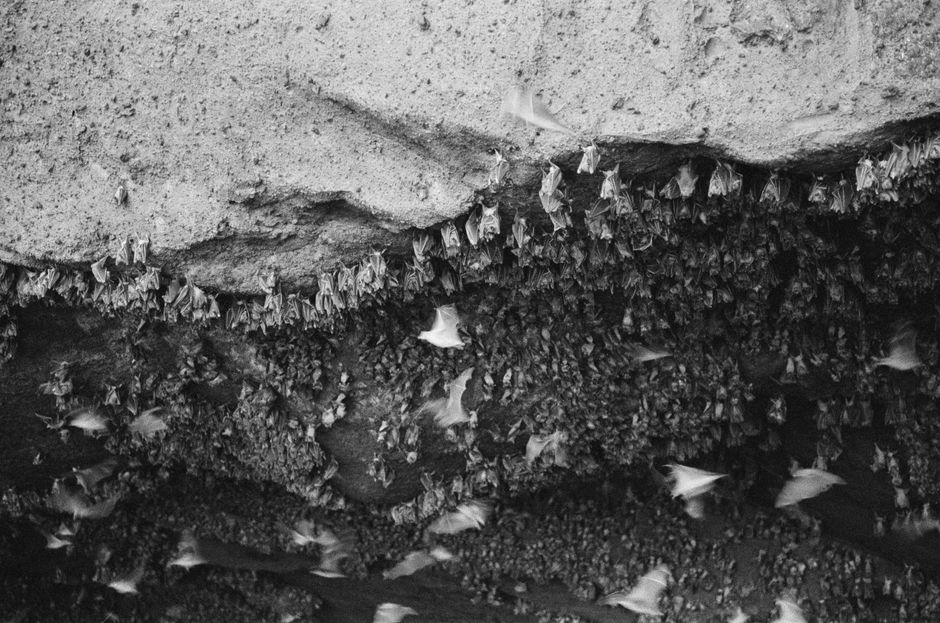
What the New Study Actually Found
Seven years in the making. Researchers led by Juan Manuel Vazquez at Pennsylvania State University - working with teams from UC Berkeley, University of Arizona, University of Vermont, and Ecole Normale Superieure Lyon - built the most complete bat longevity genome dataset for any bat group to date. They sequenced near-complete genomes for eight Myotis species and maintained living cell cultures from 259 individuals across 32 species.
The genus Myotis spans 139 species across six continents, sharing a common ancestor about 33 million years ago. It is a natural test case for aging research: closely related species differ dramatically in lifespan. The shortest-lived Myotis survives about 7 years; one Brandt's myotis recaptured in Europe was 50 years old. Few genera offer such a clean comparison of long and short life in otherwise similar animals.
How Do Bats Live So Much Longer Than Other Small Mammals?
The clearest pattern in the data: longer-lived Myotis species carry substantially more cancer-fighting genes. But the mechanism is not what you might expect.
When researchers exposed cells from the long-lived little brown bat (Myotis lucifugus, maximum lifespan up to 34 years) to toxic chemicals that damage DNA, the cells did not attempt repair. They activated cell-death programs and eliminated the damaged cells entirely.
This "purge the damaged cell" strategy is also used by elephants and bowhead whales - two other long-lived, cancer-resistant animals. The logic is straightforward: a cell that is removed before it replicates cannot become a cancer. Repairing DNA is faster but leaves room for error. Long-lived bats, elephants, and whales appear to have independently converged on this approach - and it appears to pay off across decades of life.
Smaller, short-lived mammals like mice prioritize repair over elimination. This works on a short lifespan but accumulates mutations over time. The bat genome data suggests the "clear the damaged cell" strategy is a key part of living far beyond what body size alone would predict.
The Surprising Connection: Virus Defense, Cancer, and Aging Are One System
For decades, aging research, immunology, and cancer biology were separate fields with largely separate mechanisms. The bat data points to something different: one evolutionary pressure shaped all three at once.
Bats have expanded their genes for interferon signaling and DNA-virus-interacting proteins, giving them specialized defenses against DNA viruses like herpes and poxviruses. For fast-changing RNA viruses like influenza, bats use "copy number variation" - maintaining extra gene copies that can match new viral shapes. Humans and other primates went the opposite direction: stronger RNA-virus defenses, weaker DNA-virus ones.
This helps explain why bats serve as natural reservoirs for so many viruses that cause problems in humans. Their immune systems manage DNA viruses at lower cost. Ours do not - and the mismatch creates risk at the species boundary.
The deeper insight: the same adaptations that help bats fight DNA viruses also appear to reduce cancer risk and extend lifespan. This is what biologists call agonistic pleiotropy - a gene variant selected for one advantage (virus defense) turns out to benefit seemingly unrelated ones (cancer resistance and longevity). The cellular reason makes sense: DNA viruses and cancerous cells both require managing broken or foreign DNA without triggering runaway cell death. The same toolkit handles both problems.
What Does This Mean for Human Health?
No new treatment follows directly from this study today. This is a comparative genomics study, not a clinical trial or therapeutic roadmap. Be direct about that.
What it does is sharpen the question for future research. If aging, cancer resistance, and immune function share gene networks rather than separate machinery, then research targeting all three together - rather than one at a time - may be more effective. Bats evolved toward a region of biology where long life, cancer resistance, and effective immunity coexist. That region demonstrably exists.
For conditions like age-related muscle loss, metabolic disease, and cancer - all linked to chronic inflammation and DNA damage - the bat data suggests asking: what specific variants let long-lived Myotis achieve this combination? Can those be studied in human cells? Those are tractable next questions, though they will take years of further work.
This also connects to a broader theme: biological aging is shaped by gene networks and behavior, not a fixed biological clock - bat research now illuminates this from a new angle. For how cancer uses separate mechanisms to evade immune cells, see how cancer's glycocalyx blocks immune recognition - a contrast that highlights how much the immune system's relationship with disease and aging matters.
For you right now: there is nothing to take or do based on this study. Approach any product claiming "bat-inspired longevity" benefits with skepticism. The gap between a genome survey and a validated human therapy is measured in years of further research.
What Are the Honest Limits of This Research?
- Correlation, not mechanism. The study shows which genes differ between longer- and shorter-lived bats. It does not yet trace the step-by-step pathway from a specific gene variant to a measured cancer rate or lifespan extension. That mechanistic work is still ahead.
- Eight genomes out of 139 species. The sample is a strong start, but patterns may shift as more of the genus is sequenced.
- Cell culture versus living organism. DNA-damage experiments used cells grown in the lab, not bats followed over years. Cell behavior in culture can differ from in-body behavior.
- Species-to-species translation is hard. Bats and humans last shared a common ancestor roughly 90 million years ago. Applying bat biology to human medicine requires identifying the specific mechanism - not importing the whole immune system.
- No human data yet. The authors make no claim that any human intervention would replicate bat longevity. That claim does not exist in the science.
What Should You Watch For Next?
The next research phase will likely focus on three directions:
- Identifying exactly which genes drive the "purge damaged cells" response in long-lived Myotis species.
- Testing whether those specific variants alter DNA-damage responses in human cell lines - a step far removed from any clinical setting.
- Systematically comparing all 139 Myotis species to map when exactly long life evolved and what genetic changes accompanied each shift.
Longer-term, the unified immune-aging-cancer framing may influence how drug programs are designed for conditions like cancer, arthritis, and metabolic disease where chronic inflammation is a driver. The bat study supports a growing view in longevity biology: cancer resistance and long life are two outputs of the same biological lever.
Read the primary study at Vazquez et al., Nature 2026 and the accessible summary from UC Berkeley News, August 2026.
FAQ
Do bats really live that much longer than other small mammals?
Yes. The little brown bat lives up to 34 years; a house mouse of similar weight rarely survives 3 years. Within the Myotis genus alone, the documented lifespan range is 7 to 42 years across closely related species. One Brandt's myotis was recaptured in Europe 50 years after being banded. This extreme range within one genus is what makes bats a powerful model for longevity research.
Could bat DNA research lead to human anti-aging treatments?
Not directly and not soon. The study identifies which gene categories differ between long- and short-lived bats. Moving from "gene category" to a validated human drug requires identifying specific mechanisms, testing in human cells, animal trials, and eventually clinical studies - a process that typically takes a decade or more, and most candidates do not survive it. This study is an important early data point, not a medical roadmap.
Why do bats carry so many dangerous viruses if they have strong immune systems?
Because their immunity is differently specialized, not universally stronger. Bats evolved tolerance - hosting DNA viruses like herpes and coronaviruses without dying - through the same gene adaptations that contribute to their longevity. But a bat-carried virus that spills into a human encounters a completely different immune environment. Our RNA-specialized defenses are poorly calibrated for the DNA-type viruses bats carry most effectively, creating risk at the species boundary.
Is this research published in a credible peer-reviewed journal?
Yes. The paper "Insights into longevity and virus-driven adaptation from Myotis bat genomes" was published in Nature on August 26, 2026 (DOI: 10.1038/s41586-026-10932-7). Nature is one of the most selective peer-reviewed journals in science. The work involved collaborators from multiple universities and was independently funded.
What is agonistic pleiotropy and why does it matter here?
Agonistic pleiotropy means a gene variant selected for one advantage turns out to benefit a seemingly unrelated one. In bats, genes refined over millions of years to fight DNA viruses also appear to produce better cancer resistance and longer life - not by design, but because the same cellular machinery handles both DNA viruses and damaged DNA. It suggests fighting aging and fighting certain diseases may share one biological lever, not require separate ones.
Source(s): Vazquez et al., Nature (2026); UC Berkeley News, August 2026; Penn State University, 2026
About the author
I'm Dao Huy (Lucas), a professional translator working across English, Vietnamese, Chinese, and French, with over seven years in technical, legal, and scientific translation. I follow the frontier of biology, medicine, and AI partly because the science directly shapes what I translate, and partly because these questions are genuinely worth understanding. This study is a good example: when biologists find that aging and immunity share the same gene network, it changes how research papers in oncology and longevity are written - and how translators need to read them carefully.
If you need English-Vietnamese technical or scientific translation - including medical, patent, or life-sciences documents - I'd be glad to help. You can request a quote at daohuy.com.
Written by Dao Huy (Lucas), Vietnamese translator & localization specialist (EN · ZH · FR → Vietnamese). See translation services →